

Each stage follows the school's age-appropriate approach: no pushing, no rushing — just the right challenge at the right time.

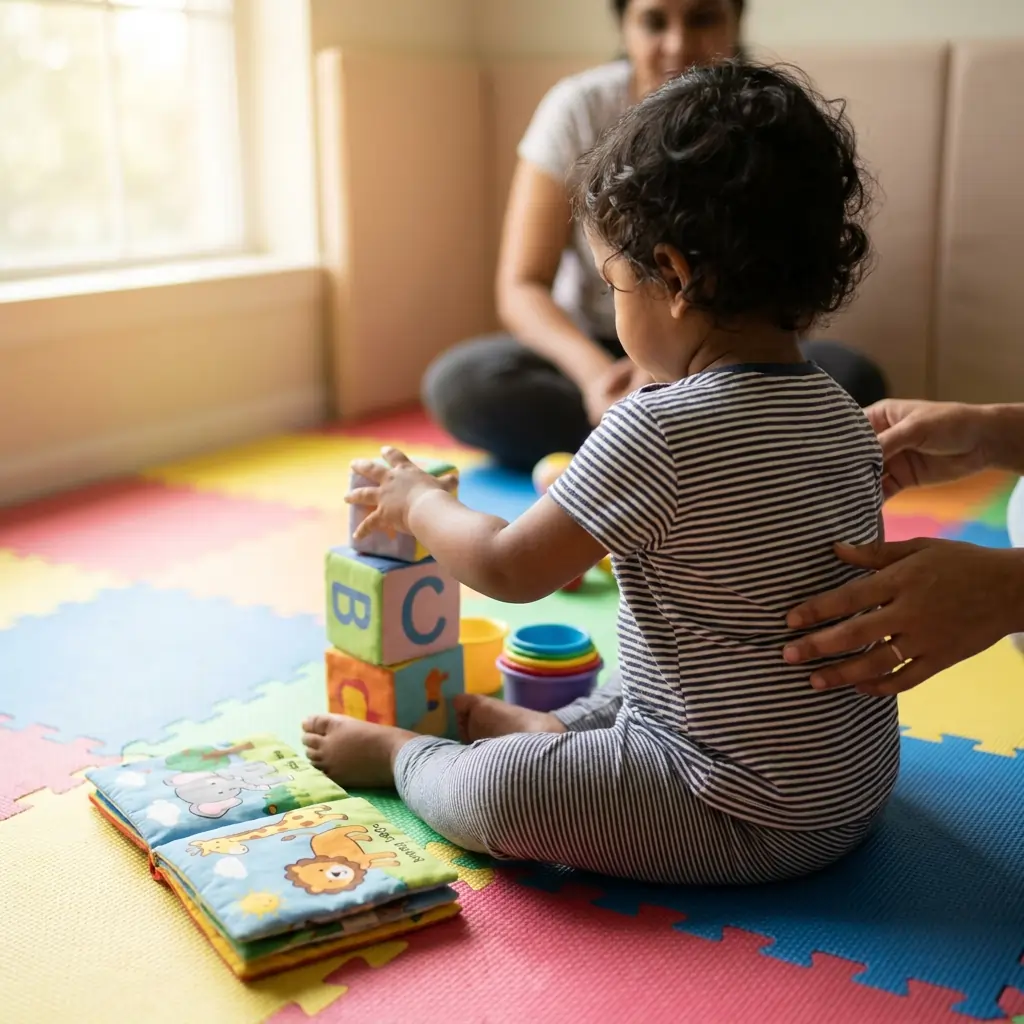
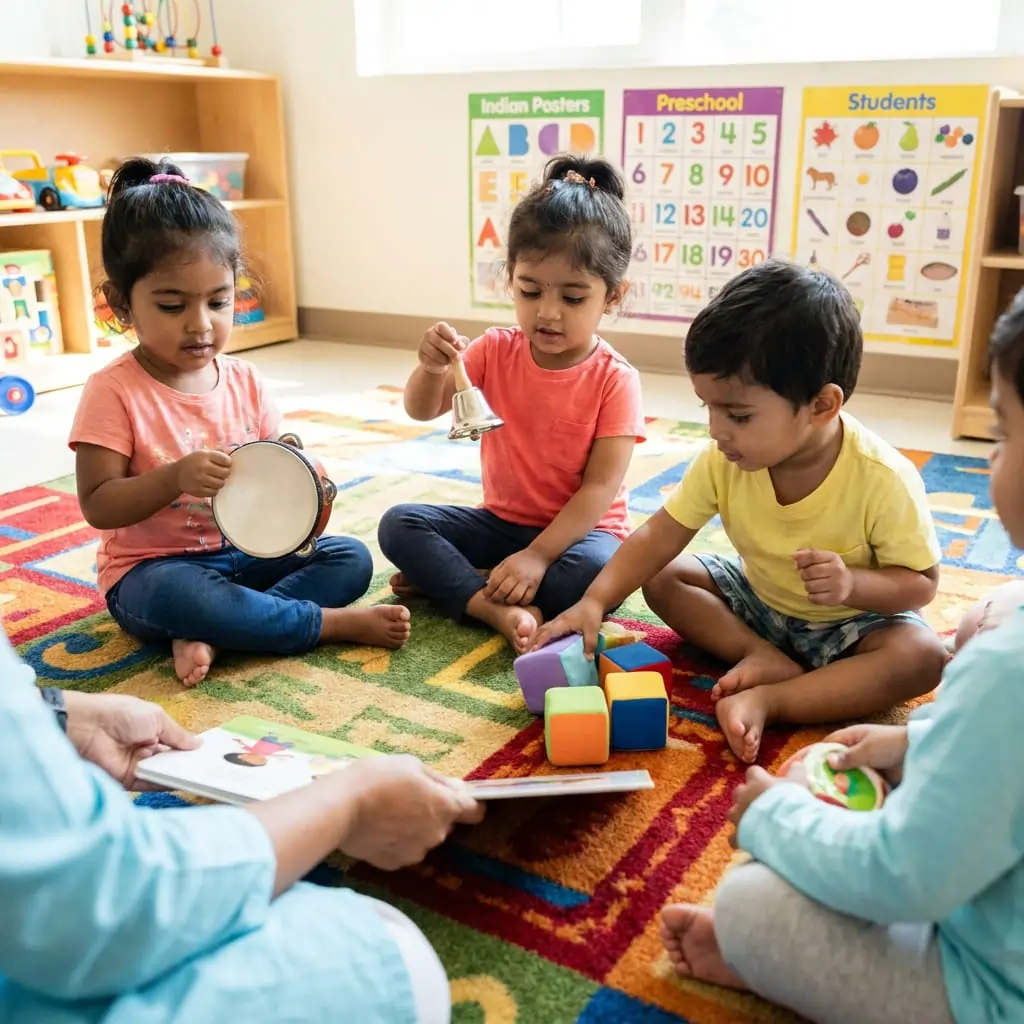
For children aged 2 to 3, the first need is comfort. This stage helps children adjust to new faces, routines, and time away from parents with gentle structure.
At this stage, learning is about settling in, interacting, playing, listening, responding, and becoming familiar with a school-like rhythm.
Nursery is a bridge between free early exploration and more structured classroom habits. Children begin to understand simple routines, group activities, early communication, and foundational learning through age-suitable methods.
The aim is not to overload the child, but to make learning feel familiar and enjoyable while supporting social confidence, listening, language readiness, and early number exposure.
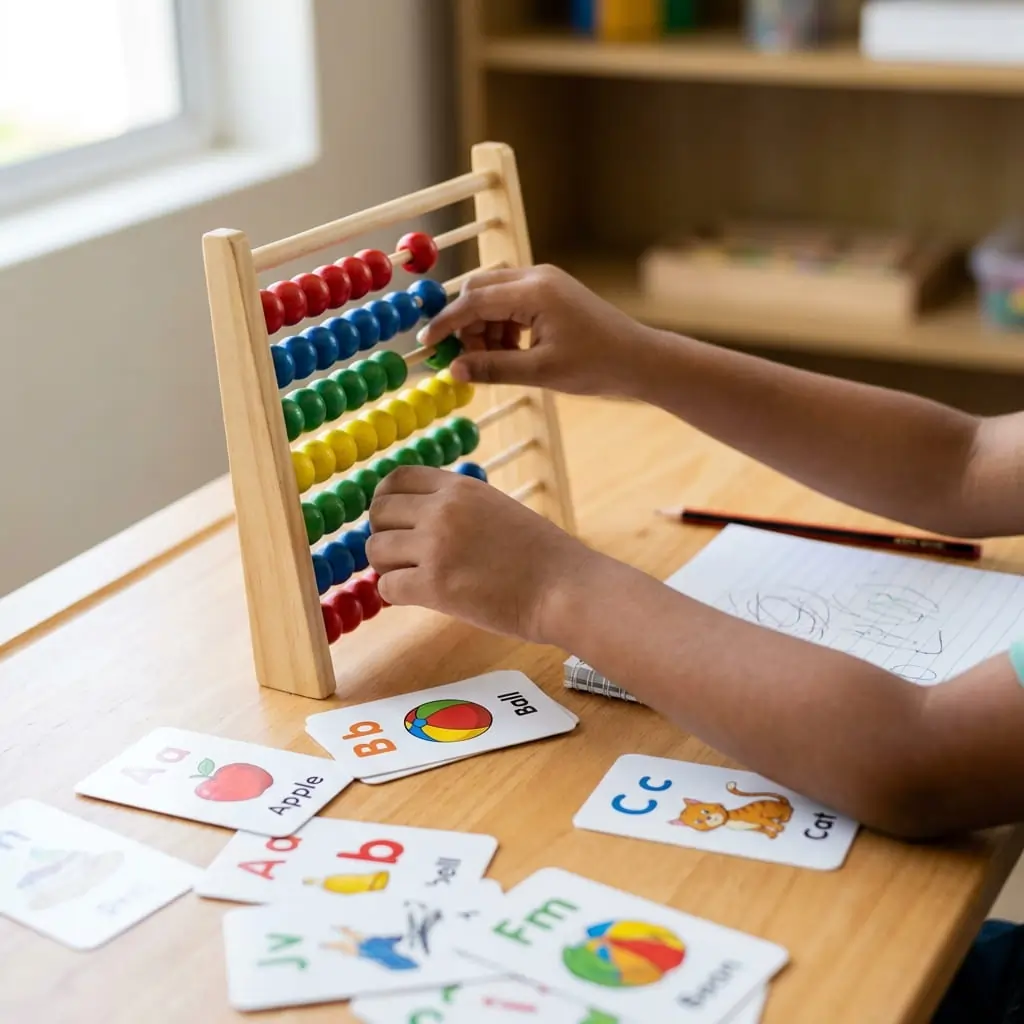
Junior KG gives children a stronger learning rhythm with more focused activities, early literacy, number readiness, classroom participation, and guided expression.
Children should feel challenged enough to grow, but not pushed beyond readiness. This stage supports confidence before Senior KG and regular school routines.
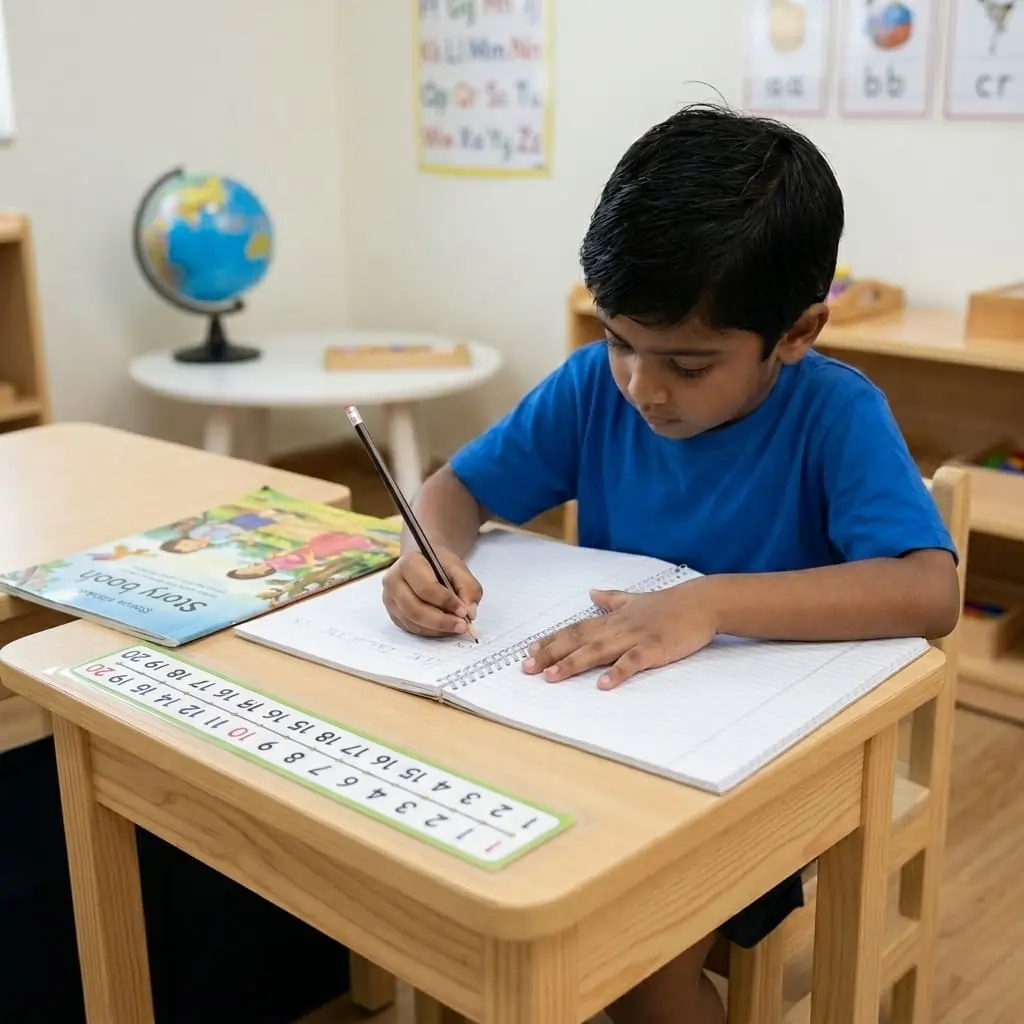
Senior KG supports the final preschool stage before moving into regular school. The focus is on strengthening early learning habits, communication, confidence, and school-readiness foundations.
Even with more structured tasks, the same philosophy remains: learning should be guided at the right level for the child's stage.
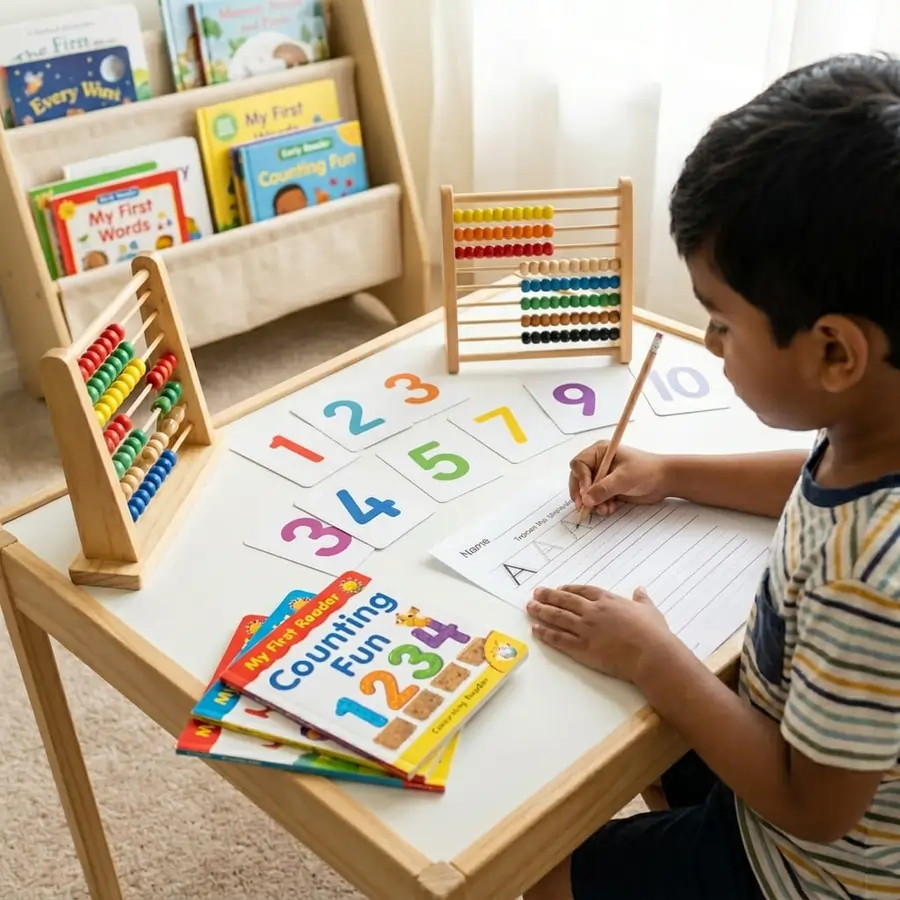
Abacus is available as a value-add program for enrolled students. It supports early number familiarity and mental math foundations in a structured way.
For young children, number confidence grows gradually. Abacus gives children another way to engage with numbers beyond routine classroom exposure.
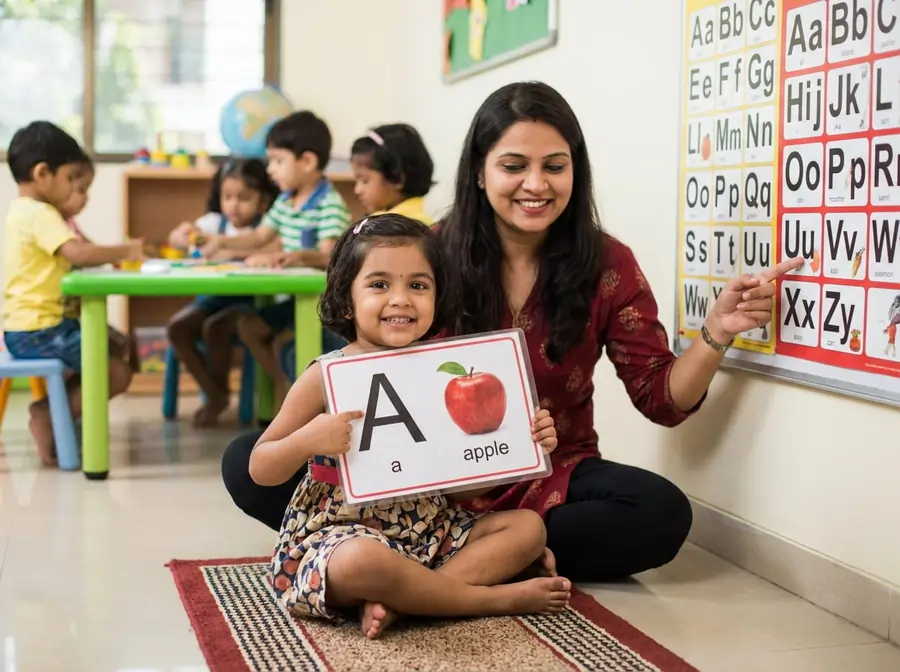
Phonics is available for enrolled students and supports reading foundations by helping children connect sounds and letters in a systematic way.
Early reading confidence shapes how a child approaches books, words, and classroom learning. Phonics builds a stronger language base when introduced at the right stage.

The simplest way to choose is by your child’s age first, then by their comfort and readiness. A 2-year-old needs a very different experience from a 5-year-old. That is why the school separates learning across clear age groups.
If you are unsure where your child fits, start with the age group and ask the school what the next step should be.